If you are travelling around the Ozarks on this Memorial Day weekend, you are in for a treat with the weather.
The National Weather Service says temperatures will continue to warm each day, with highs reaching into the low 80’s. No rain is expected.
Forecasters say isolated showers and storms will be possible during the afternoon and evening hours on Memorial Day, but most locations should remain dry.
The music world lost one of the all-time great rock stars when Tina Turner passed Wednesday (May 24), at the age of 83.
The former Ike & Tina Turner singer possessed the style, the songs and sass, her mid-‘80s solo comeback is the stuff of legend, and her longevity helped to redraw the lines for showbiz.
It was on the stage, however, where Turner was TNT. When the “Nutbush City Limits” star strutted her stuff, it was always pure heat. Explosive.
Below, Billboard compiles some of Turner’s top televised performances.
Turner had to wait for induction into the Rock & Roll Hall of Fame, but she made a terrific case for elevation during the 1989 ceremony. That year, Turner inducted Phil Spector and performed with a starring cast that included Bruce Springsteen, Little Richard, John Oates and more. Her closing performance of “River Deep – Mountain High,” her 1966 Spector-produced classic, was a sizzling highlight. In 1991, Spector inducted Ike & Tina Turner on their behalf, and in 2021, Tina was inducted as a solo artist by Angela Bassett, who had portrayed the singer in 1993’s docudrama What’s Love Got To Do With It.
For those who closely followed Tina Turner journey, her solo comeback in 1984 represented so much more than a musical revival. Turner would later speak openly about how she had once attempted suicide by taking 50 sleeping pills to her escape abusive marriage with Ike Turner. Her 1970 reworking of “Proud Mary,” written by John Fogerty, frontman of Creedence Clearwater Revival, helped her heal. Turner, the survivor, would perform the song on Italian TV in 1971. Sit back and soak it up.
Two full years before Michael Jordan, Larry Bird, Magic Johnson and the rest of the Dream Team swept to gold at the 1992 Barcelona Olympic Games, Tina Turner was winning hearts in the Catalonian capitol. Turner performed an epic concert at the Barcelona Olympic Stadium in 1990, which was captured for a TV special and included this cut of “Better Be Good to Me,” from 1984’s Private Dancer.
With 1984’s Band Aid project, Bob Geldof and Midge Ure wanted to “Feed The World.” With their trans-Atlantic Live Aid concert in 1985, Geldof and Ure changed the world. On Saturday, July 13, 1985, a full house at London’s Wembley Stadium caught some of the biggest acts on the planet, from Paul McCartney, to Elton John, U2, The Who, David Bowie and Queen. Then, Philadelphia’s John F. Kennedy Stadium came online, with a lineup that included Led Zeppelin, The Beach Boys, Madonna, Duran Duran, and Rolling Stones frontman Mick Jagger. As he completed his set, Jagger welcomed Tina Turner on stage for performances of “State of Shock” and “It’s Only Rock ‘n Roll (But I Like It),” one of the final musical moments in an historic day for live music.
“Nutbush City Limits” is a song that passes the test of time. Once a piece of art crosses that threshold, it’s literally unimpeachable (the contribution of the controversial Ike Turner will always add an asterisk to the duo’s works). “Nutbush” captures a sound and a time that can’t be repeated. It rocks but you can dance to it, and the synth solo is a moment of wizardy. None of it matters without the injection of fire that Tina Turner brings. Don’t believe it? The proof is there, captured for eternity on a 1973 episode of Der Musikladen (The Music Shop), a West German music TV program that ran from 1972 to 1984. Turner is pure dynamite.
Tina Turner’s name is etched into the hearts and minds of all Australians who grew up in the ‘80s or ‘90s, thanks to her years-long association with the national rugby league competition. Turner appeared in promotional videos as the sport expanded into the NRL, now one of the most popular professional sports in these parts. Her song “The Best” soundtracked some of those memorable campaigns, and is today recognized as the unofficial song of Australian rugby league. There’s no argument about Turner’s place in Australian sport: she’s the Queen of Rugby League. During the 1993 NRL grand final, Turner performed “The Best” for a full house at the Sydney Football Stadium. Watch the clip below and listen for the roars of approval from football fans.
The late Tina Turner had a river deep connection with Australia, one that was built on hits, touring, connections and a unique sporting alliance.
Turner’s extraordinary solo comeback in 1984 was engineered by Roger Davies, the great Australian artist manager who has guided the careers of Pink, Olivia Newton-John, Janet Jackson, Cher and many others. For bonus points, Davies was portrayed by one of his clients, James Reyne, frontman of Australian Crawl, in 1993’s What’s Love Got to Do With It, the award-winning autobiographical film based on Turner’s life.
The rocker also starred as Auntie Entity in 1985’s Beyond Thunderdome, the third in George Miller’s Mad Max action movie franchise.
The “Nutbush City Limits” singer, however, would tackle something no other U.S pop artist had done, when she committed to a series of much-loved campaigns for Australia’s premier rugby league competition.
From 1989 to 1995, Turner was the face of the New South Wales Rugby League (NSWRL) competition, now rebranded the National Rugby League (NRL), appearing alongside the game’s most famous athletes in national commercials, and sometimes on the ground for the sport’s showpiece events, including a set during the 1993 grand final at the Sydney Football Stadium.
Those campaigns included Turner’s hits “What You Get Is What You See” and “The Best,” and, for many sports fans and athletes in these parts, she represents a golden era for the code.
Thanks to her contribution as the competition expanded out of New South Wales, “The Best” is today recognized as the unofficial anthem of rugby league in Australia, a sport for only the knuckliest, toughest types in society.
Turner, who in one memorable promotional video pushes those he-men around in the dressing room, was a perfect fit, her sass, style and songs offsetting the brawn. She became the unlikely Queen of League.
Those Aussie connections played a part. Because her manager Davies was Australian “we were able to make contact,” John Quayle, then head of the NRL, recounts in an interview with the Australian Broadcasting Corporation. The sport’s administrators presented to Davies while on a visit to his homeland. A partnership seemed unlikely, then an opportunity materialized.
“He rang and said you’ve got one day in London to film and if you can do it, we can have a look at it and go from there.” Working in “freezing conditions,” the team taught Turner the finer points of the game, she warmed to it, and a slice of marketing magic was created.
On Wednesday (May 24), Turner died at 83 years old, prompting both fans, fellow musicians and friends to express their condolences on social media — including one particular sporting code in the land Down Under.
“Vale Tina Turner, the Queen of Rugby League,” reads one post from the official NRL account.
In April 1972, the Country Music Association held its inaugural “Fan Fair” at Nashville’s Municipal Auditorium, welcoming 5,000 fans and featuring artists including Loretta Lynn, Roy Acuff, Tom. T. Hall, and Ernest Tubb.
In the five decades since, the festival — which was rebranded CMA Fest in 2018 — has evolved into the four-day festival that regularly draws 80,000 fans to downtown Nashville. On June 8-11, CMA Fest will celebrate its 50th anniversary, featuring performances from artists including Tim McGraw, Luke Bryan, Luke Combs, Lainey Wilson, Miranda Lambert, Eric Church, HARDY, Cody Johnson and Hailey Whitters.
That growth and evolution — which included relocations to the Tennessee State Fairgrounds in 1982 and to downtown Nashville in 2001 — will be highlighted in the 75-minute documentary CMA Fest: 50 Years of Fan Fair, which will debut on Hulu on Wednesday, July 5.
CMA Fest: 50 Years of Fan Fair marks CMA’s first feature film. CMA’s CEO Sarah Trahern and senior vp, marketing, content & communications strategy Kelly Striewski serve as executive producers on the film.
The festival’s journey is shown through one-on-one interviews with artists including Keith Urban, Wynonna Judd, Jeannie Seely, Lorrie Morgan, Dolly Parton, Frankie Staton, Carrie Underwood and Reba McEntire.
“CMA Fest has taken several shapes throughout its storied history,” Trahern said via a statement. “As we step into our 50th year, our hope with this film is to underscore the one thing that has remained with the festival—its heart. We are thrilled to share the evolution and magic of this incredible event with the Hulu audience.”
“What better way to tell the story of CMA Fest than through the eyes of the artists, our industry and the fans,” Striewski added. “This film highlights the truly unique connection that exists within CMA Fest and how this festival has continued to grow the Country community throughout its 50 years. We couldn’t be happier to have this story debut on Hulu.”
“We have a long and valued partnership with CMA and are excited to expand on that by adding this extraordinary film to the Hulu slate,” said Rob Mills, executive vp, unscripted and alternative entertainment, Walt Disney Television. “We can’t wait to share this with music lovers everywhere, who will be treated to a behind-the-scenes look at the heart of CMA Fest and its many contributions to the country music community.”
CMA Fest’s history will also be feted with other exhibitions, including the photography exhibition “In the Hands of the Fans: Fifty Years of CMA Fest,” which opens June 6 at the Country Music Hall of Fame and Museum. Additionally, on June 10, the Hall of Fame will feature a screening of the 1997 documentary Fan Fair Phenomenon, which aired on The Nashville Network. The screening will take place at 2:30 p.m. on June 10 in the museum’s Ford Theater and is included with the cost of museum admission, though Country Music Hall of Fame and Museum members can view the documentary for free.
Medical experts testified on Day 3 of the trial for a former M-S-U instructor.
A forensic expert with the Missouri State Highway Patrol testified that Edward Gutting’s blood alcohol level was well over the legal limit a few hours after his arrest.
The medical examiner testified that Marc Cooper was killed by stab wounds to his neck and torso.
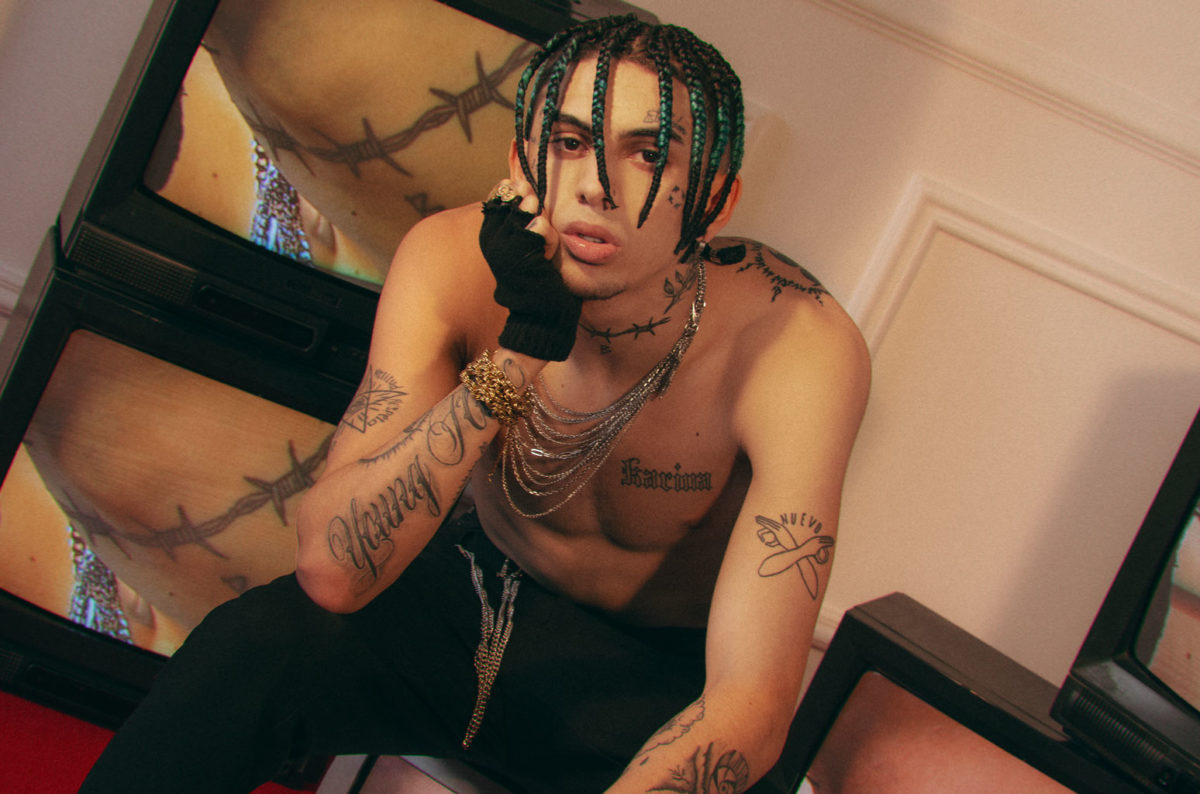
At 17, Khea decided to quit school for a year to follow his dreams. It was that same year, in 2017, that his career began to flourish. By the age of 20, the Argentine artist born Ivo Alfredo Thomas Serue managed to scale the Billboard charts with his trap and hip-hop fusions and inked a deal with Interscope Records worldwide in early 2020.
But in the midst of his skyrocketing success, Khea lost himself and his love for his craft.
Related
Latin Artist on the Rise: Khea on Exporting Argentine Trap to the Masses
“I didn’t want to continue writing songs like that, which from my perspective, were somewhat empty,” he tells Billboard of his songs such as “Ayer Me Llamo Mi Ex” (2020) and “Wacha” (2021), both of which entered the Billboard charts. “I was already distancing myself from this world.”
He admits that he fell into severe depression during the pandemic but thanks to a solid support system and an understanding record label, he was not only able to pull through and heal, but also give life to his new studio album Serotonina.
The set — musically charged with R&B, salsa and EDM fusions and lyrically backed by deep content — is his first set in three years and his most ultra-personal production de yet.
Below, the Argentine act opens up to Billboard about his battle with mental health and how he’s coping today.
The powerful intro in Serotonina really sets the tone not only for the rest of the album but also sheds light on your own personal struggles with fame and depression: Why did you feel this is the correct time to open up about your mental health battle?
It’s really not about the “right time.” It was what happened to me and what I wanted to communicate. The moment happened like this. Clearly, I wanted to return to music and I did not want to come back with the message that I was communicating before. Beyond the moment, everything I want to communicate today is found in this album.
Can you take us back to the time in your career when you felt a disconnect with your music?
In the last months, before I fell into depression, I was already writing ultra-deep lyrics. But at the same time, I was releasing songs such as “Ayer Me Llamo Mi Ex” and “Wacha,” and similar songs that made me realize I didn’t want to continue writing songs like that, which from my perspective, were somewhat empty. I was writing other things, and listening to other types of music, like Silvio Rodriguez. I was already distancing myself from this world. But when this began to happen to me personally—looking down on myself and not being able to go outside because I had anxiety attacks—I really thought that one of the things that caused me to be like this was that I was no longer connecting with what my art said. So this whole process also went beyond a search to grow personally and it was rediscovering my musical self.
We know the album was born during a turbulent time in your life: Can you elaborate more on the creative process?
I went to the south of my country to a house in Bariloche for 20 days with my producer Nobeat, my engineer Mariano Bilinkins, and Spreadlof, a composer from Spain that my record label introduced me. Spreadlof helped me a lot in this new part of the composition, but he also helped me a lot personally, that’s why I decided to take him with me to do this album. We connect very well. The ideas and the demos of the album were created in those 20 days. Afterward, it took many months of work, production, and changing lyrics and melodies, it was a 10-month process.
You are an open book in every lyric on the album: Which of the 13 tracks would you say was the most difficult to pen and why?
Really, “Eclipse” was the most difficult. It was even the one that scared me the most to release and that’s why I decided to make it my first single because it was the only way to face my fear. I feel that I show myself super vulnerable and it’s a genre with new melodies and less autotune. I think that was the hardest to finish writing and also to release.
You’re known as a pioneer of the Argentine trap movement but this album is far from that—it’s the most experimental we’ve heard you: What motivated you to create EDM, tropical music, and other genres?
I wanted to create an experimental album. I wanted to travel to the south of my country and work on a conceptual album [inside a home] how artists such as Queen, The Beatles, and Rolling Stones, used to do. I feel that that way of creating music is incredible because it’s like locking yourself in a time machine and training every day to get the best out of you. I had in mind to create all the versatility you hear on the record, and I am very satisfied with the result.
In “Nunca Voy Solo,” there’s a phrase that says: “ya cai, ya falle, con los mios me levante” (I fell, I failed, but I got up with my people): Who would you say was crucial in your healing process?
Everyone in my personal environment, from my girlfriend to my friends to my family, gave me a very strong emotional containment when I was going through this process. My label, Interscope, knew how to give me my time and had patience. They understood that I was going through a very difficult time. I really believe that giving a person time—not pushing, not judging, and just listening and trying to understand that it’s a process and that he or she is going to get out of that place—is the best way to give containment.
One of the two collaborations on this album is “Para Amarte A Ti” with Tiago PZK—a colleague you have joined forces with on multiple occasions: What does he represent in your life?
For me, beyond the fact that he is a colleague in the industry, he’s like a literal brother to me. Since I met him we had a very strong connection. He’s someone who I lean on when I have to talk about something. I always call him and he’s the same with me. We have a very fluid communication and I really feel that people will like our joint track on the album. He is very special in my life and in my career.
How do you navigate depression today? Are there any coping mechanisms that helped?
First, talk things out. You have to at least have one or two trusted people in your life to whom you can tell everything and have another point of view. After, full therapy. I do holistic therapy, which requires spirituality and family trees. I do therapy with microdoses of mushrooms that are being studied and are very healthy for the mind and much better than Xanax and other pills. I meditate, train when I can, and really try to breathe. I think breathing is very key and a free tool that we all have. During any anxious moment, take three minutes to breathe, and it can really change your day. If you do it with constancy, it changes your month, and if you do it with a lot of persistence, it changes your life. I knew how to analyze all these factors and they help me every day.
Bill Lee — a well-regarded jazz musician who accompanied such artists as Bob Dylan, Simon and Garfunkel and Harry Belafonte as well as scoring four of his son Spike Lee’s early films, including the hit Do the Right Thing and two songs for Jungle Fever — has died. He was 94.
Lee died Wednesday (May 24) at his home in Brooklyn, said Theo Dumont, a publicist for Spike Lee. The younger Lee posted several photos of his father on his Instagram page announcing the death.
Lee was a session bassist who has played on albums by Odetta, Woody Guthrie, Cat Stevens, Gordon Lightfoot, John Lee Hooker and Peter, Paul and Mary, among many others. He can be heard on Dylan’s “It’s All Over Now, Baby Blue” and Lightfoot’s “Oh, Linda.” He played on Aretha Franklin’s Columbia album debut in 1960 Aretha.
Lee wrote the soundtracks to Spike Lee’s She’s Gotta Have It, School Daze, Do the Right Thing and Mo’ Better Blues. Bill Lee also appeared in Do the Right Thing.
Bill Lee and Spike Lee were estranged after a falling out in the 1990s that the father attributed to his remarriage to Susan Kaplan.
In addition to Kaplan and Spike Lee, the elder Lee is survived by his sons, David, Cinque and Arnold; a daughter Joie; a brother, A. Clifton Lee; and two grandchildren.
J-Hope gave fans a fun military update on Tuesday night (May 23) when he took to his Instagram Stories to share a photo of himself in his uniform.
In the photo, the 29-year-old BTS star is seen giving a soft smile as he salutes the camera. See the photo before it disappears here.
Over on Weverse, J-Hope share two more photos and a message for fans, according to Soompi. “ARMYs!! I’ve completed [the basic training] well. The letters and support you sent me have been a great help and thanks to that I was able to do my best during training,” he wrote. “I will do my best for the rest of my military service period as well and show you the good sides of me! I love you!! Cellphone is fascinating… Hahaha.”
J-Hope’s entrance into the military on April 18 makes him the second BTS member to fulfill the 18-month South Korean mandatory military service after Jin, who started his requirement last year. The remaining BTS members will also be required to complete their service over the next couple of years.
In a video shared to the K-pop group’s BANGTANTV last month, Suga, RM, Jung Kook, Jimin and V all arrived at the drop-off location to send off the rapper. After taking several pictures with his fellow BTS members, J-Hope gave BTS ARMY one final message: “Yes, ARMY, I’m off now. I’m fulfilling my duty as an able-bodied Korean man. I’ll be sure to make a safe return and be better than ever and greet you then. Fighting! I love you.”
Sebastian Yatra picks up his eighth No. 1 on Billboard’s Latin Pop Airplay chart as “Una Noche Sin Pensar” rises 2-1 to lead the May 27-dated list. The new leader follows the six-week champ “Tacones Rojos,” Yatra’s longest-leading track on the list (two weeks at No. 1 in January, with four earlier weeks at No. 1 in February-March of 2022).
“Una Noche Sin Pensar” hits No. 1 in its 13th week on the ranking with a 20% gain in audience impressions, to 10.2 million, earned in the U.S. in the week ending May 18, according to Luminate. It sends Karol G and Shakira’s “TQG” to No 2 after four weeks in charge.
Related
All the Latin U.S. Tours Announced for 2023 (Updating)
With the new champ, Yatra improves his career total of Latin Pop Airplay No. 1s to eight, and enters a tie with Chayanne for the eighth-most No. 1s among Latin pop male acts, a mark helmed by Enrique Iglesias with a total of 25 since the chart began in 1994. Here’s a look at those Latin male artists with the most No. 1 Latin pop songs:
25, Enrique Iglesias 12, Ricky Martin 11, Cristian Castro 11, Juanes 10, Luis Fonsi 10, Luis Miguel 10, Ricardo Arjona 8, Chayanne 8, Sebastián Yatra
At 13 weeks, “Una Noche” ties for Yatra’s second-longest trek to the summit among his eight rulers. “TBT,” with Rauw Alejandro and Manuel Turizo, also needed 13 weeks on its way to a three-week takeover in June 2020. Meanwhile, “Bonita” with Juanes outpaced both tracks, hitting No. 1 in its eighth week in November 2019.
Beyond its Latin Pop Airplay coronation, “Una Noche” climbs to its new No. 3 high, from No. 6, on Latin Airplay, Yatra’s highest ranking since “Tacones Rojos” placed him at the penthouse for one week in February 2022.
Shakira’s ‘Acróstico’ Lands: Elsewhere on Latin Pop Airplay, Shakira captures her 41st top 10 with “Acróstico” at No. 6. The intimate piano ballad, which includes vocals by her sons Milan and Sasha, was released May 11 with a lyric video via Sony Music Latin. According to Luminate, the track generated 2.6 million audience impressions after its first tracking week.
With 41 top 10s on her chart account, Shakira continues to rank third among all acts, only behind Enrique Iglesias, who leads with 45 top 10s, and Ricky Martin’s 42.